Hosted by Dr. Paul R. Williams Lawyering Peace Podcast

Dr. Paul R. Williams explores peace negotiations, diplomacy, and international criminal justice with seasoned practitioners, legal advisors, former ambassadors, and veterans of international tribunals.

Jump to a theme
Paradigm Shift Series
Ruhee Neog

Dr. Paul Williams sits down with Ruhee Neog, Director of the Institute of Peace and Conflict Studies in New Delhi, to examine whether today's geopolitical turbulence reflects a true paradigm shift. They explore India's strategy of multi-alignment, nuclear stability, and how AI is reshaping global power structures.

Listen to episode

Ruhee Neog

Paradigm Shifts and the Rise of India

Kat Fotovat

Kat Fotovat — global expert on gender, AI, and international security — explores how technological disruption is reshaping the role of women in peacebuilding, from deepfakes enabling harassment to AI enhancing early warning systems, and the concept of embedding a "maternal instinct" into AI design.

Listen to episode

Kat Fotovat

Gender, AI, and the New Global Order

Łukasz Adamski

Dr. Łukasz Adamski, Deputy Director of the Mieroszewski Dialogue Centre, discusses Poland's "deep trauma" of 1939, whether the EU can ever truly function as a global superpower, and why the current paradigm shift is moving Eastern Europe away from law toward military self-reliance.

Listen to episode

Dr. Łukasz Adamski

Eastern Europe and the Future of Global Order

Rubén Beltrán & Jorge Lomónaco

Two former senior Mexican diplomats examine Mexico's place in the shifting global order — why Mexico sits between a rock and a hard place with the US, Latin America's deep fragmentation, and whether the window for meaningful diversification is closing or just opening.

Listen to episode

Beltrán & Lomónaco

Mexico as a Rising Middle Power

Dr. Kushtrim Istrefi

Dr. Kushtrim Istrefi — Associate Professor at Utrecht University and substitute member of the Venice Commission — interrogates whether the rules-based international order is fracturing, evolving, or simply revealing what it always was, and why human rights sit at its most exposed frontline.

Listen to episode

Dr. Kushtrim Istrefi

The Future of the Rules-Based International Order

Dr. Mitat Çelikpala

Dr. Mitat Çelikpala, Dean at Kadir Has University in Istanbul, examines why the Black Sea has become the defining microcosm of great power competition, how Türkiye's transactional foreign policy is reshaping the balance from Syria to the Caucasus, and where Türkiye's century-long modernization is heading.

Listen to episode

Dr. Mitat Çelikpala

Türkiye's Position in the Emerging Global Shift

Dr. Maria Mälksoo

Dr. Maria Mälksoo, Professor at the University of Copenhagen, discusses why the collapse of shared ritual and legal norms may be more dangerous than it appears, whether Europe's strategic awakening is enough, and why AI has become a sovereign actor no existing accountability structure was built to handle.

Listen to episode

Dr. Maria Mälksoo

After the Liberal Order: Power, Norms, and the Emerging World

Special Series: Prospects for Peace in Ukraine Series
Prof. Matthew Ford

Professor Matthew Ford of the Swedish Defence University explores how smartphones, AI, and private tech platforms are reshaping modern warfare — blurring the line between battlefield and home front, enabling real-time intelligence and narrative shaping, and raising urgent questions about sovereignty, algorithmic targeting, and democratic accountability.

Listen to episode

Prof. Matthew Ford

Technology, Law, and the Future of Warfare

Dr. Taras Leshkovych

Dr. Taras Leshkovych of the UN Human Rights Monitoring Mission in Ukraine discusses documenting violations during active conflict, how the human rights landscape evolved since 2014, conditions in occupied territories, and why rigorous documentation today is essential for future accountability.

Listen to episode

Dr. Taras Leshkovych

Protection of Human Rights in the Midst of War

Dr. Marieke de Hoon

Dr. Marieke de Hoon, Professor of International Criminal Justice at the University of Amsterdam, traces the legal pathways built around MH17 accountability — the Dutch criminal trial and convictions of November 2022, inter-state proceedings at the ECHR, and the ongoing appeal at the International Court of Justice.

Listen to episode

Dr. Marieke de Hoon

MH17 Case and the Long Road to Justice

Lidiia Kuzmenko

Lidiia Kuzmenko, Protection Officer at UNHCR Ukraine, offers expert insight into the daily realities facing more than five million displaced people inside Ukraine — legal barriers, housing, livelihoods, and the conditions required for safe and voluntary return.

Listen to episode

Lidiia Kuzmenko

Inside Ukraine's Displacement Crisis

Dr. Khrystyna Kit

Dr. Khrystyna Kit, chairwoman of JurFem and expert adviser to Ukraine's Prosecutor General's Office, explains why women's participation in decision-making is a precondition for sustainable peace, and why a quick peace that sidelines accountability risks a return to violence.

Listen to episode

Dr. Khrystyna Kit

Survivor Centered Justice in Ukraine's Path to Peace

Henry Scott

Henry Scott, partner at Milbank, explains how the US–Ukraine Reconstruction Investment Fund blends in-kind equity, strategic finance, and critical minerals access to drive Ukraine's recovery — and why this agreement could become a global template for post-conflict reconstruction financing.

Listen to episode

Henry Scott

Inside the U.S.–Ukraine Reconstruction Investment Fund

Dr. Dmytro Koval

Dr. Dmytro Koval of Truth Hounds unpacks how the Zaporizhzhia Nuclear Power Plant — Europe's largest — became a site of coercion, forced collaboration, and impunity, and why international law must evolve to confront nuclear terrorism by proxy.

Listen to episode

Dr. Dmytro Koval

Nuclear Occupation: Zaporizhzhia and Legal Accountability

Dr. Anna Mysyshyn

Dr. Anna Mysyshyn, Founder of the Institute of Innovative Governance, explores AI-generated disinformation, deepfakes, and cyberattacks targeting Ukraine's critical infrastructure — and how Ukraine is adapting through regulation, digital resilience, and international cooperation.

Listen to episode

Dr. Anna Mysyshyn

Digital Battlefronts: AI, Disinformation, and Cyber Warfare

Dr. Anton Korynevych

Dr. Anton Korynevych, Director of International Law at Ukraine's Ministry of Foreign Affairs, shares his front-line perspective on the Special Tribunal for the Crime of Aggression — how it complements the ICC and ICJ, and what it signals to complicit states and the world at large.

Listen to episode

Dr. Anton Korynevych

Special Tribunal for the Crime of Aggression Against Ukraine

Ogryzko & Braithwaite

Lesia Ogryzko and Julian Braithwaite explore credible security commitments for Ukraine — from the roles of EU, US, and NATO to global players like China, India, and Brazil — and how a pluralistic, robust post-war security architecture can emerge from peace talks.

Listen to episode

Ogryzko & Braithwaite

A Post-War Security Framework for Ukraine

Mykola Yurlov

Ukrainian diplomat Mykola Yurlov breaks down the legal foundation for transferring frozen Russian sovereign assets, outlines how transfers support the three-part international compensation mechanism, and explains why delay harms the broader credibility of international law.

Listen to episode

Mykola Yurlov

Frozen Russian Assets as Compensation

Ioffe & Rashevska

Dr. Yulia Ioffe and Dr. Kateryna Rashevska examine Russia's illegal deportation of Ukrainian children — re-education, forced adoptions, name changes, and the erasure of Ukrainian identity — and how the legal response could shape the future of child protection in armed conflict.

Listen to episode

Ioffe & Rashevska

The Return of Deported Ukrainian Children

Yuna Potomkina

Ukrainian lawyer Yuna Potomkina, adviser to Ukraine's Minsk delegation (2020–2022), reflects on past negotiation shortcomings and makes a compelling case for Ukrainian-led, legally sound peace efforts where accountability is non-negotiable.

Listen to episode

Yuna Potomkina

Building a Peace Process for Ukraine

Dr. Gaiane Nuridzhanian

Dr. Gaiane Nuridzhanian explains the case for a Special Tribunal for the Crime of Aggression against Ukraine — walking through the treaty-based model, head-of-state immunity, trials in absentia, victim inclusion, and implications for future peace negotiations.

Listen to episode

Dr. Gaiane Nuridzhanian

Prosecuting Aggression: The Case for a Special Tribunal
Prof. Tetyana Antsupova

Prof. Tetyana Antsupova — former Supreme Court judge of Ukraine — reflects on the sweeping judicial reforms unfolding since 2014, how reform advances EU membership goals, and the unique challenges of rebuilding institutions during active conflict.

Listen to episode

Prof. Tetyana Antsupova

Judicial Reforms in Ukraine: Pathways to EU Membership
Oleksandra Matviichuk

Nobel Peace Laureate Oleksandra Matviichuk, Head of the Center for Civil Liberties, outlines a comprehensive vision of justice — from prosecution and reparations to public truth-telling — and warns against sidelining accountability in peace negotiations for short-term political gain.

Listen to episode

Oleksandra Matviichuk

Pursuing Justice and Accountability in Ukraine
Dr. Kateryna Busol

Dr. Kateryna Busol explores the widespread and systematic use of conflict-related sexual violence by Russian forces, how societal norms fuel CRSV as a weapon of aggression, and why survivor-centered, gender-sensitive approaches to accountability are essential for a sustainable peace.

Listen to episode

Dr. Kateryna Busol

Conflict-Related Sexual Violence in Russia's War in Ukraine

Whyte & Istrefi

Ambassador Elayne Whyte Gómez and Professor Kushtrim Istrefi explore the risks of unresolved territorial disputes, the role of international law in protecting Ukraine's 1991 borders, and practical tools including international administration and non-recognition strategies to maintain Ukraine's territorial claim during negotiations.

Listen to episode

Whyte & Istrefi

Defending Ukraine's Territorial Integrity

Mykola Stetsenko

Mykola Stetsenko, President of the Ukrainian Bar Association, discusses the pivotal role of private sector investment in Ukraine's post-war reconstruction — key industries primed for growth, public-private partnerships, and how Ukraine is modernizing rather than merely rebuilding.

Listen to episode

Mykola Stetsenko

Ukraine's Path to Economic Renewal
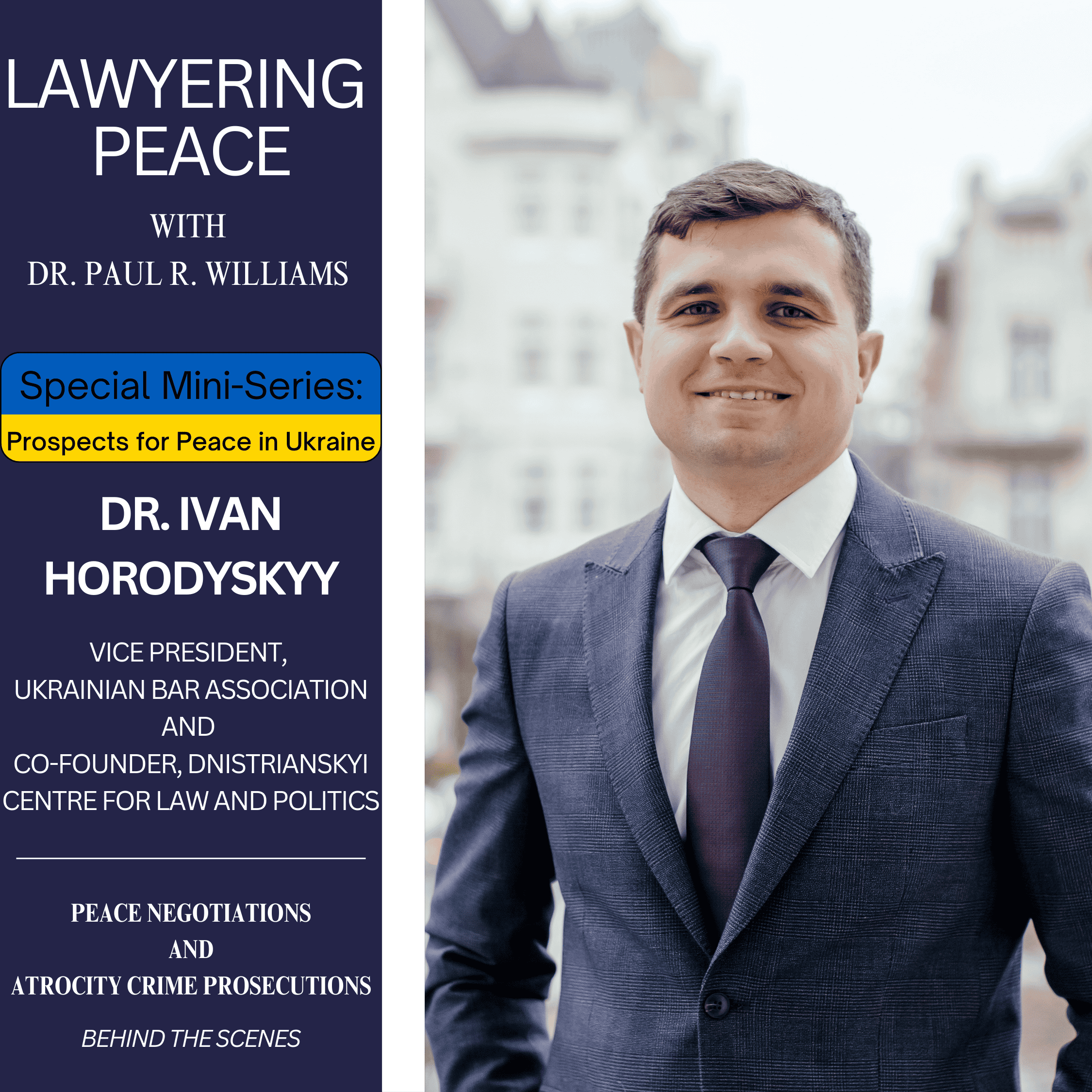
Dr. Ivan Horodyskyy

Dr. Ivan Horodyskyy, Vice-President of the Ukrainian Bar Association, discusses reparations for Russia's war damage — what a compensation mechanism could look like, how it should be funded, the role of frozen Russian assets, and strategies for future reparations negotiations.

Listen to episode

Dr. Ivan Horodyskyy

Reparations, Frozen Assets, and Ukraine's Path to Recovery

David Crane

Professor David Crane, Founding Chief Prosecutor of the UN Special Court for Sierra Leone, explores a ceasefire model for Ukraine inspired by the Multinational Force and Observers for the Sinai, the rise of power-centric diplomacy, and the future role of the UN in an uncertain international order.

Listen to episode

David Crane

Ceasefire Models, Power Diplomacy, and a Shifting Global Order
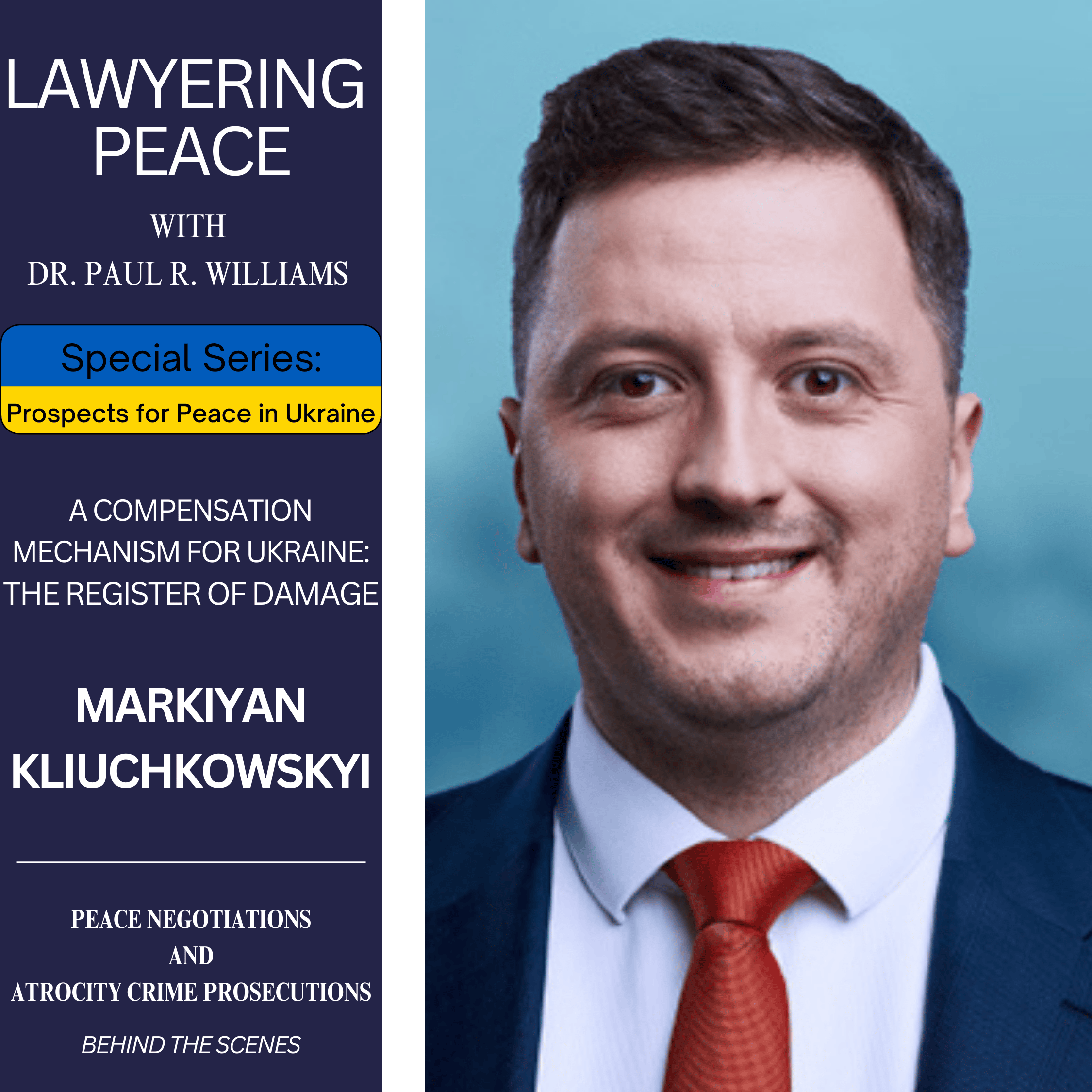
Markiyan Kliuchkovskyi

Markiyan Kliuchkovskyi, Executive Director of the Register of Damage for Ukraine, explains how this first-of-its-kind mechanism lays the legal and evidentiary foundation for future reparations — giving Ukrainians a chance to document losses and ensuring reparations remain a pillar of any future peace.

Listen to episode

Markiyan Kliuchkovskyi

A Compensation Mechanism: The Register of Damages

Mini Series: Post-Assad Syria Series
Hind Kabawat

Hind Kabawat shares her experiences returning to Damascus after 14 years — reflecting on a nation scarred by war yet brimming with hope. A key figure in Syrian peace negotiations, she discusses the vital role women play in shaping Syria's future, from leading educational initiatives in refugee camps to advocating for transitional justice.

Listen to episode

Hind Kabawat

Opportunities for Women in Post-Assad Syria

Ammar Abdulhamid

Syrian intellectual and activist Ammar Abdulhamid offers an in-depth analysis of Syria's transitional moment — the promise of a resurgent civil society, the critical role of governance, fostering inclusivity across Syria's rich religious and cultural diversity, and the opportunities for the US and its allies to support this transition meaningfully.

Listen to episode

Ammar Abdulhamid

Syria's Transition: Democracy, Civil Society, and International Engagement

Betsy Popken

Betsy Popken, Chief Legal Advisor to the Syrian Opposition during the Geneva Peace Talks, evaluates the role of HTS in shaping a more inclusive future, the potential of a national dialogue to create a new constitution, and how Syrians can build a democracy rooted in collaboration — without repeating the missteps of past Arab Spring transitions.

Listen to episode

Betsy Popken

Syria's Path to Transition: Inclusivity, Justice, and the Road Ahead
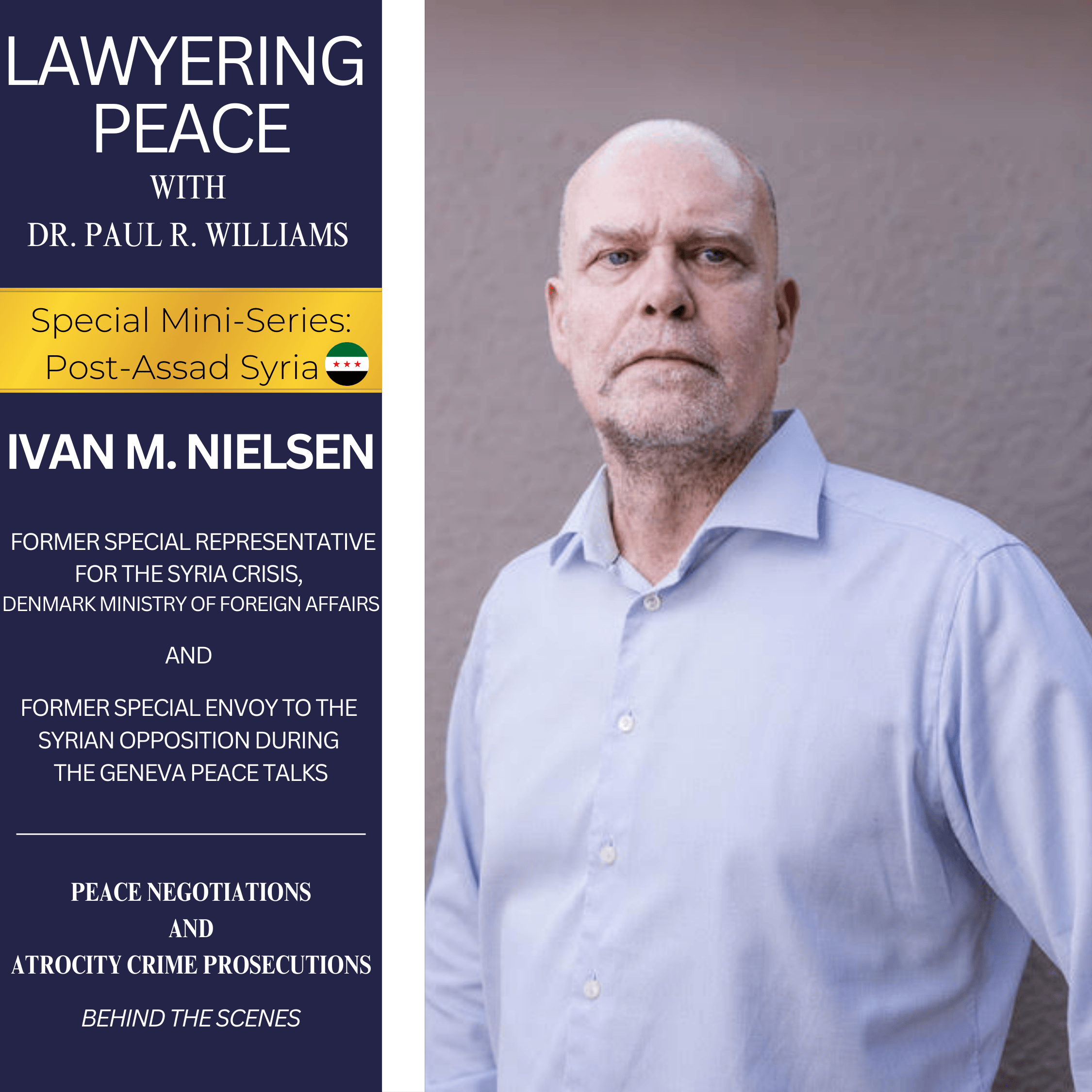
Ivan M. Nielsen

Seasoned Danish diplomat Ivan M. Nielsen, former special representative for the Syria crisis, reflects on lessons from the Geneva peace talks and the three critical tracks for a successful Syrian transition: security, service delivery, and civic space — urging the international community to listen to Syrians rather than impose rushed Western-driven agendas.

Listen to episode

Ivan M. Nielsen

Pathways to Unity, Governance, and International Engagement
Peace Negotiations Theme
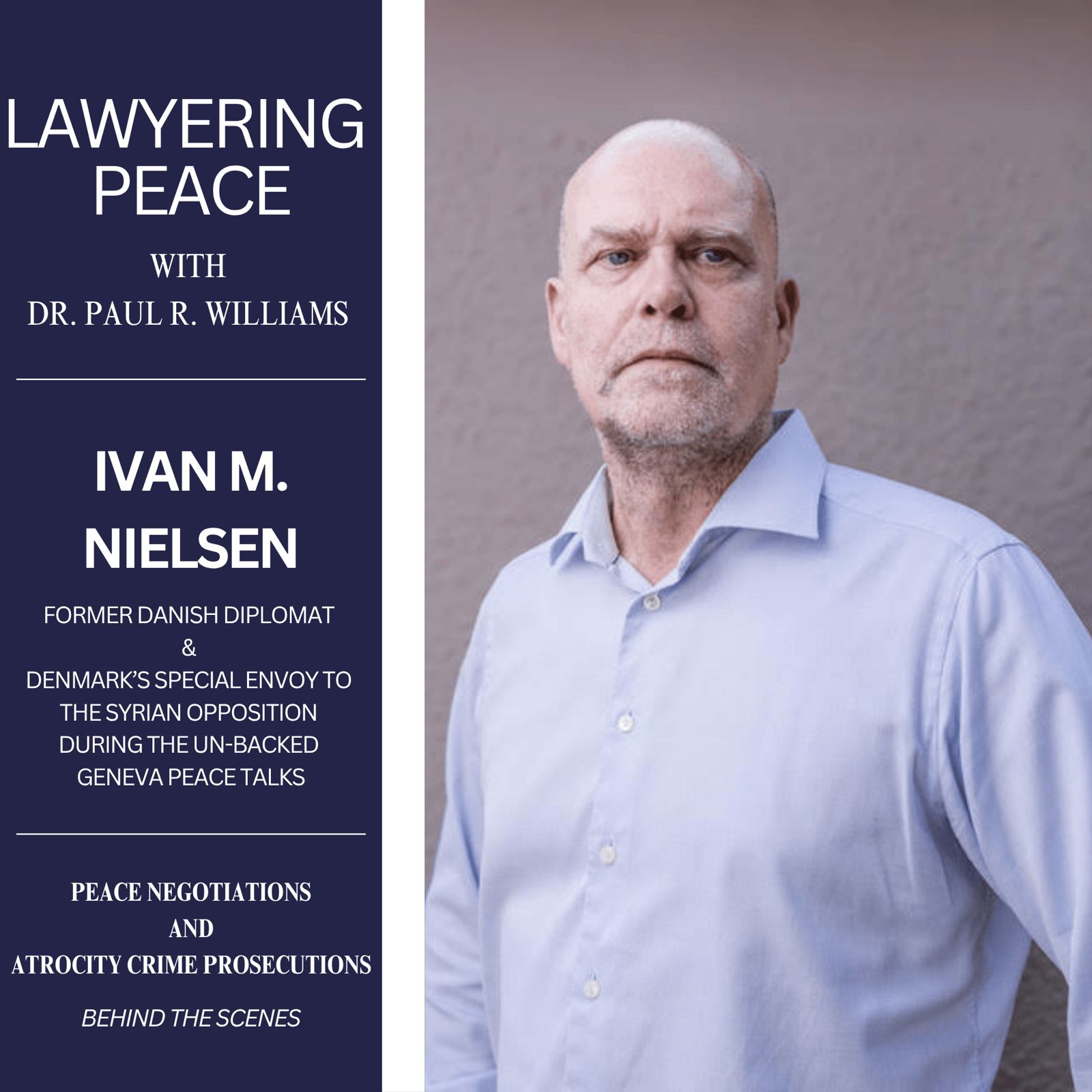
Ivan M. Nielsen

Former Danish diplomat Ivan M. Nielsen, Denmark's Special Envoy to the Syrian Opposition during the UN-backed Geneva peace talks, reflects on how the Assad regime went through the motions of negotiation while continuing attacks on civilians — and shares core lessons for Syria and other post-conflict states.

Listen to episode

Ivan M. Nielsen

Behind the Geneva Talks: Diplomacy and Peace in Syria

Edita Tahiri

Kosovo's former Deputy Prime Minister and chief negotiator Edita Tahiri shares her inspiring story — from leading peace talks during the Rambouillet negotiations to championing gender equality in the Balkans, unifying delegations, and addressing the ongoing challenges of unfinished peace with Serbia.

Listen to episode

Edita Tahiri

Trailblazer for Kosovo's Independence and Gender Equality
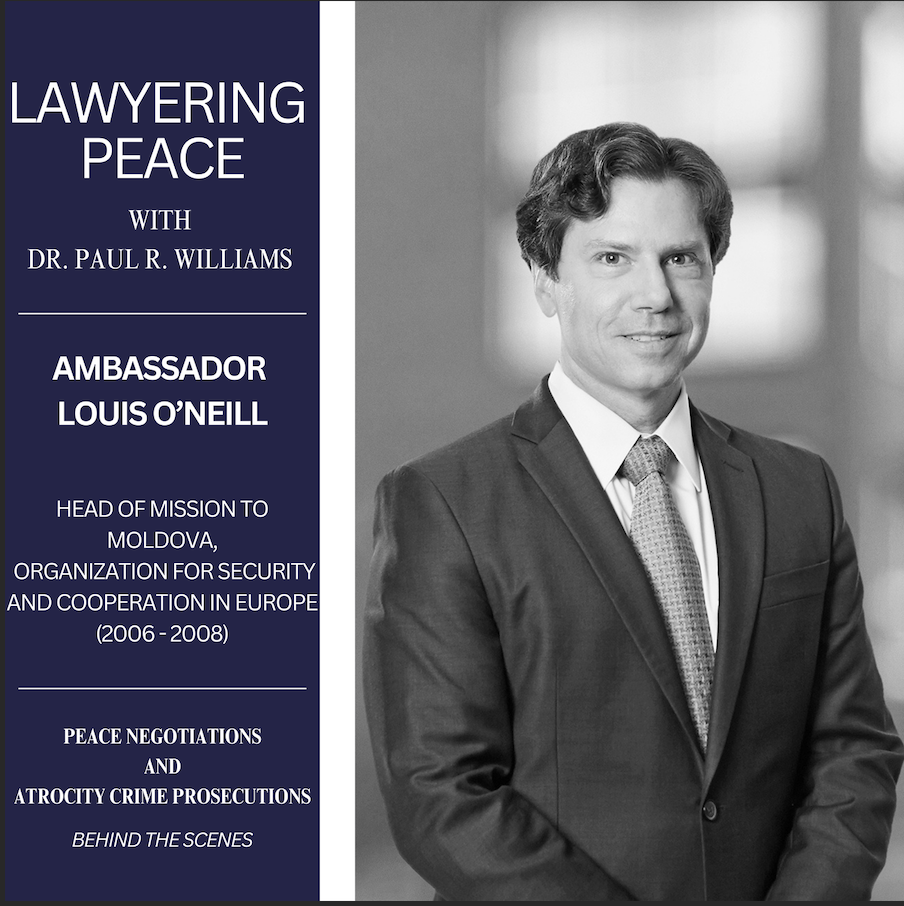
Ambassador Louis O'Neill

Ambassador Lou O'Neill, former OSCE Ambassador to Moldova (2006–2008), unpacks Moldova's ongoing struggles with frozen conflicts in Transnistria and Gagauzia, the far-reaching ramifications of Russian influence, and how the war in Ukraine has reshaped the region's dynamics.

Listen to episode

Ambassador Louis O'Neill

Moldova, Transnistria, and EU Accession
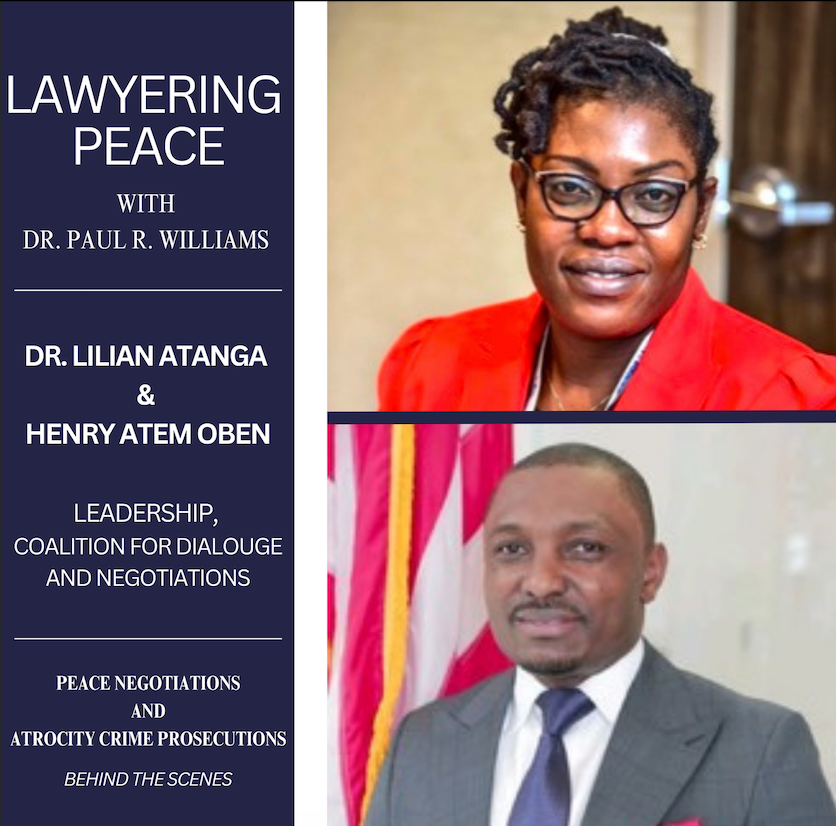
Dr. Lilian Atanga & Henry Atem

In Part 1, Dr. Lilian Atanga and Henry Atem explore the complex conflict between Anglophone Southern Cameroon and the Francophone government — its colonial roots, decades of marginalization, and the series of failed peace processes leading up to the 2022 Canada Talks.

Listen to episode

Atanga & Atem (Part 1)

The Southern Cameroon Conflict & Missed Opportunities for Peace
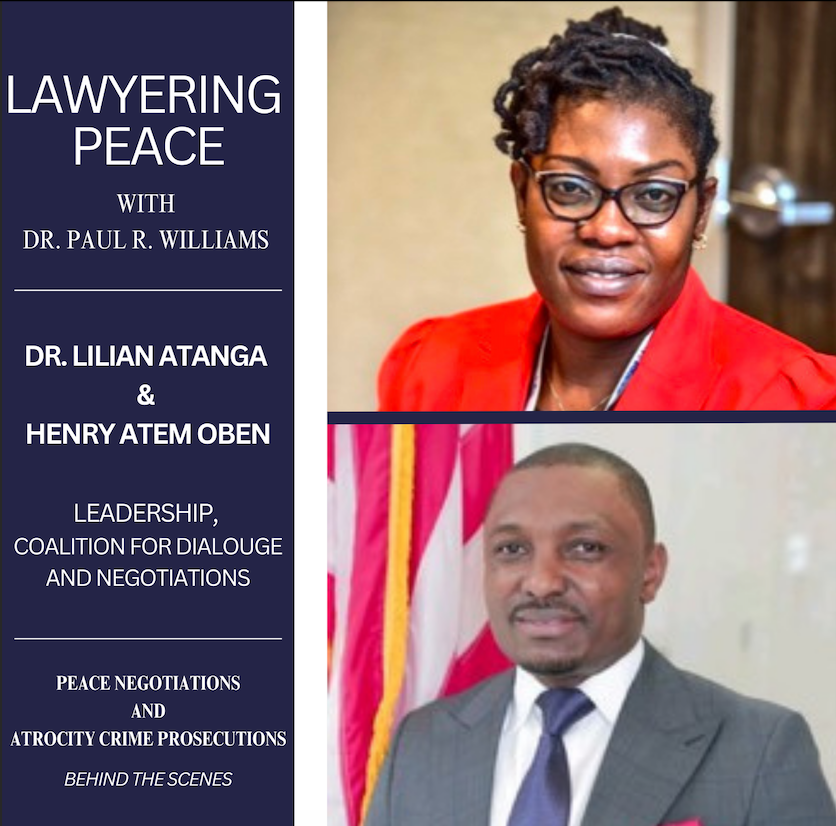
Dr. Lilian Atanga & Henry Atem

In Part 2, Dr. Lilian Atanga and Henry Atem break down how the 2022 Canada Peace Talks were structured, the Ambazonia delegation's effort to build internal cohesion, and the Cameroonian government's abrupt withdrawal after three meetings — and its subsequent denial of ever having participated.

Listen to episode

Atanga & Atem (Part 2)

The 2022 Canadian Talks & the Future of Ambazonia and Cameroon
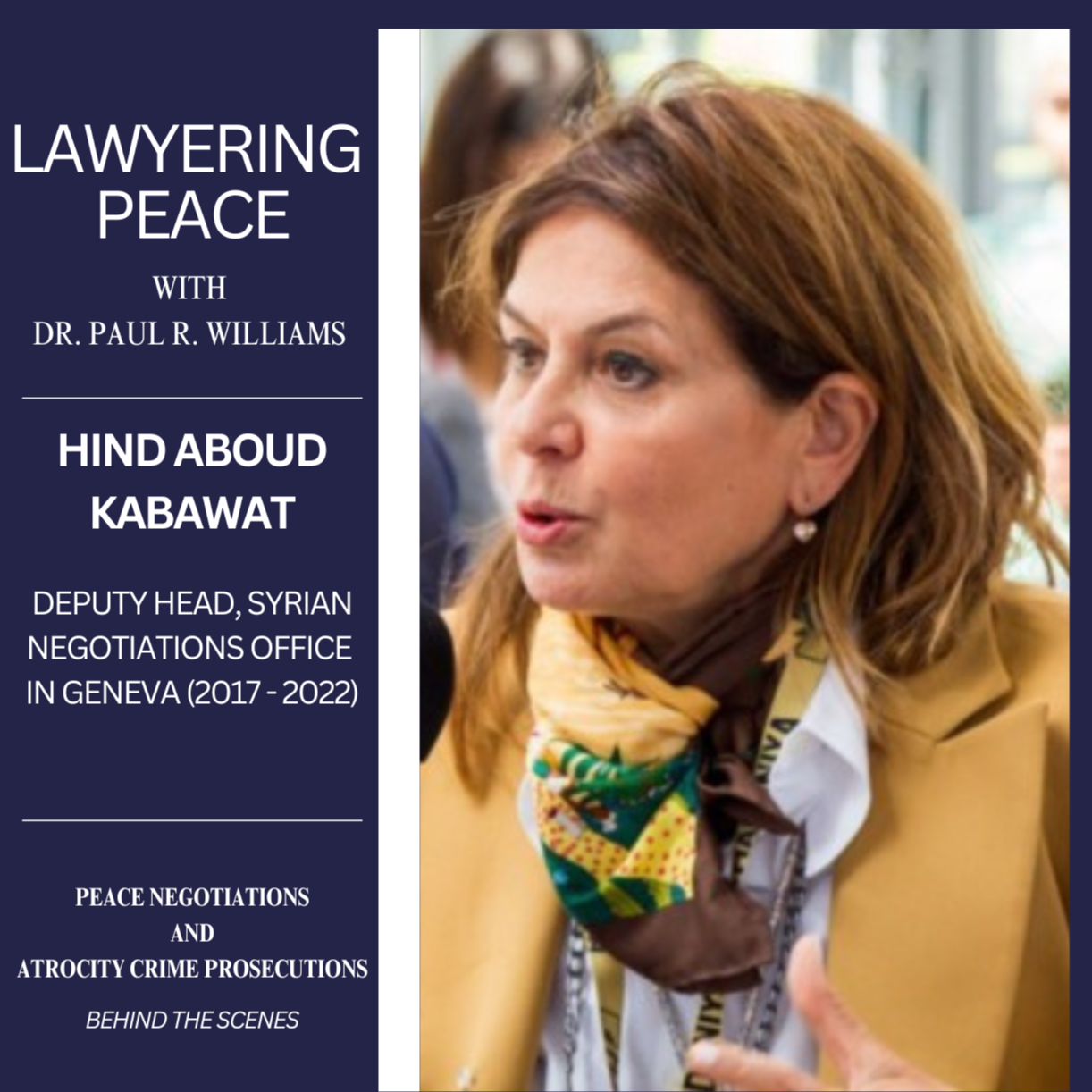
Hind Kabawat

Hind Kabawat, Deputy Head of the Syrian Negotiation Commission Office in Geneva, shares her journey from Damascus to the Geneva peace talks — the brutal realities of the Syrian conflict, her pioneering efforts to secure a 30% quota for women's representation in the opposition delegation, and the persistent need for transitional justice.

Listen to episode

Hind Kabawat

The Role of Women in the Syrian Peace Process
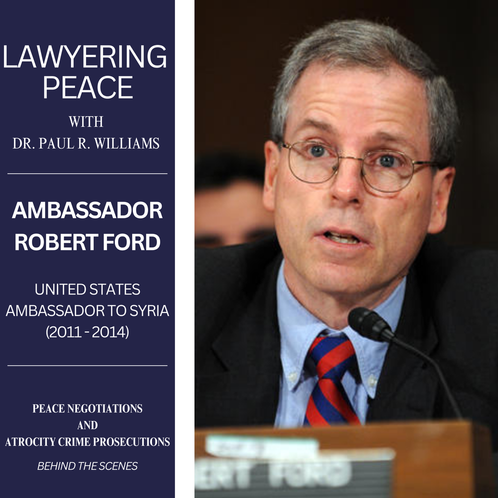
Ambassador Robert Ford

In Part 2, former US Ambassador to Syria Robert Ford delves into the turbulent years of 2011–2014 — the breakdown of dialogue, the Geneva Peace Talks, and why Assad's regime refused to discuss political transition. Ford offers practical advice on coalition-building and the pitfalls of promises that can't be kept.

Listen to episode

Ambassador Robert Ford

Navigating the Syrian Crisis 2011–2014 (Part 2)

Mohammed al-Ta'ishi

Mohammed al-Ta'ishi, chief negotiator for the Sudanese Transitional Government and key architect of the 2020 Juba Peace Agreement, reveals the behind-the-scenes challenges of managing a civilian-military delegation, navigating power-sharing dilemmas, and championing transitional justice in Sudan's complex political landscape.

Listen to episode

Mohammed al-Ta'ishi

2020 Juba Peace Agreement for Peace in Sudan
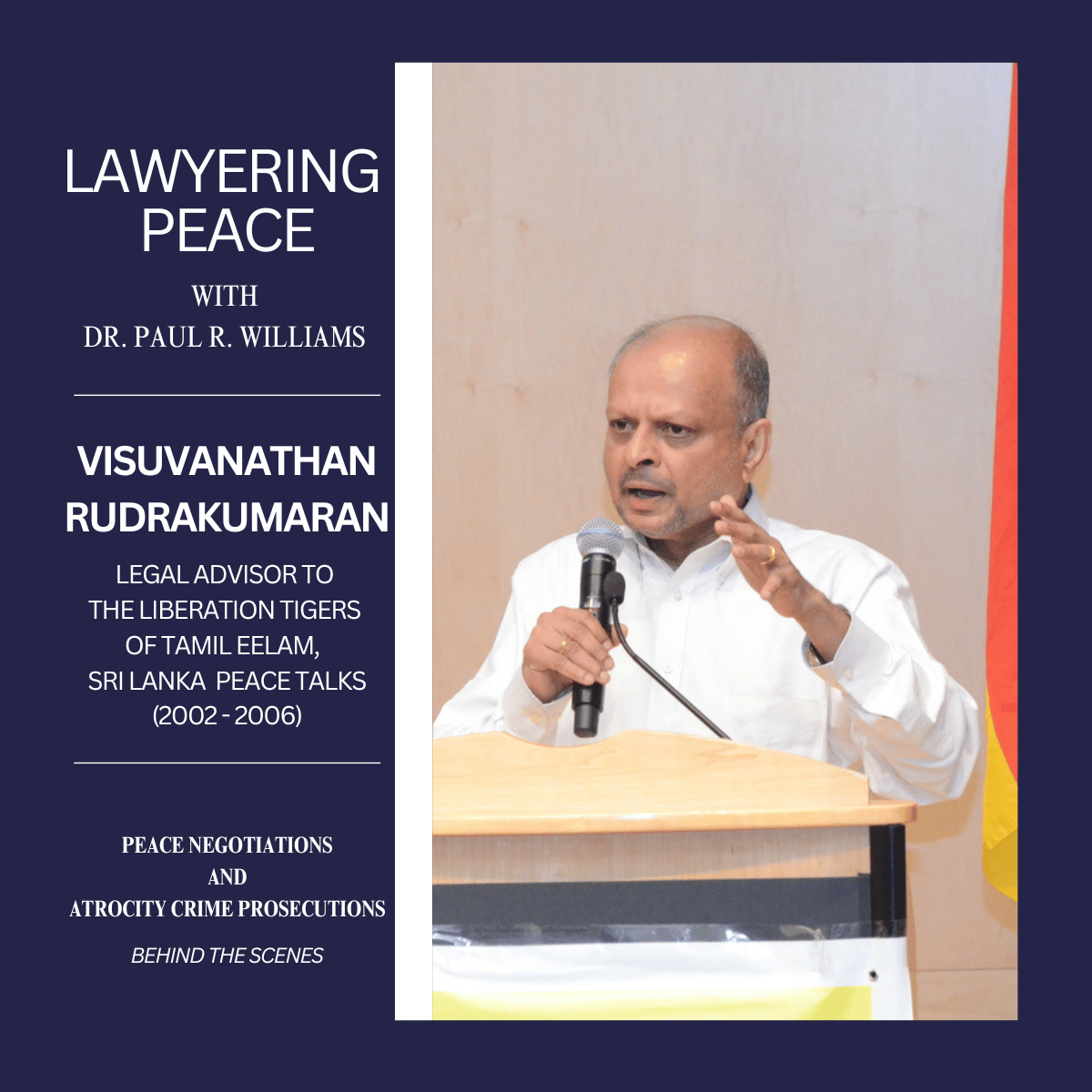
Visuvanathan Rudrakumaran

Visuvanathan Rudrakumaran, former legal advisor to the Tamil Tigers (LTTE) during the 2000 Sri Lanka peace talks, recounts the unique challenges of representing non-state armed actors, leveraging the Tamil diaspora to counterbalance state advantages, and how the parallel agendas of international mediators contributed to the collapse of the peace process.

Listen to episode

Visuvanathan Rudrakumaran

Advising the Tamil Tigers During the 2000 Sri Lanka Peace Process

Betsy Popken

Betsy Popken, chief legal advisor during the Geneva peace talks (2015–2017), offers a unique glimpse into the rigorous training and strategic planning that goes into preparing a delegation for high-stakes negotiations — and the critical roles played by women leaders in the Syrian opposition delegation.

Listen to episode

Betsy Popken

2015–2017 Geneva Peace Talks for Syria

Donald Planty

Ambassador Donald Planty, US Ambassador to Guatemala during the 1996 Peace Accords process, shares firsthand experiences from the negotiations that concluded 36 years of internal conflict — emphasizing international cooperation, relationship building, effective listening, and informal confidence-building measures as keys to success.

Listen to episode

Donald Planty

1996 Guatemala Peace Process

Robert Perito

Robert Perito, expert in security sector reform and governance, explores his role chairing the US delegation to the Angolan peace talks that ended in the signing of the Bicesse Accords — providing deep insights into the role of third-party delegations and the challenges of seeking peaceful solutions to entrenched conflicts.

Listen to episode

Robert Perito

1991 Angola Peace Process

Mathew Simpson

Matt Simpson, Principal Legal Advisor to the Darfur Delegation in the 2011 Doha Peace Negotiations, led a team of over two dozen international advisors on issues spanning power sharing, security arrangements, demilitarization, wealth allocation, and the return of displaced persons.

Listen to episode

Mathew Simpson

2011 Doha Peace Negotiations

Vartan Oskanian

Vartan Oskanian, former Minister of Foreign Affairs for Armenia, explores his role as Armenia's chief negotiator for the Nagorno-Karabakh Key West negotiations in 2001 — and the realities of negotiations that do not result in a durable peace agreement and the lessons learned for future negotiators.

Listen to episode

Vartan Oskanian

2001 Key West Negotiations

Dr. Alush Gashi

Dr. Alush Gashi, human rights activist and former Secretary of Foreign Affairs of the Democratic League of Kosova, reflects on his integral role in Kosovo's path to independence — from the Rambouillet Negotiations of 1999 to the Ahtisaari Negotiations of 2007 — and his recent efforts promoting peace in Sudan and Sri Lanka.

Listen to episode

Dr. Alush Gashi

Kosova's Rise to Independence
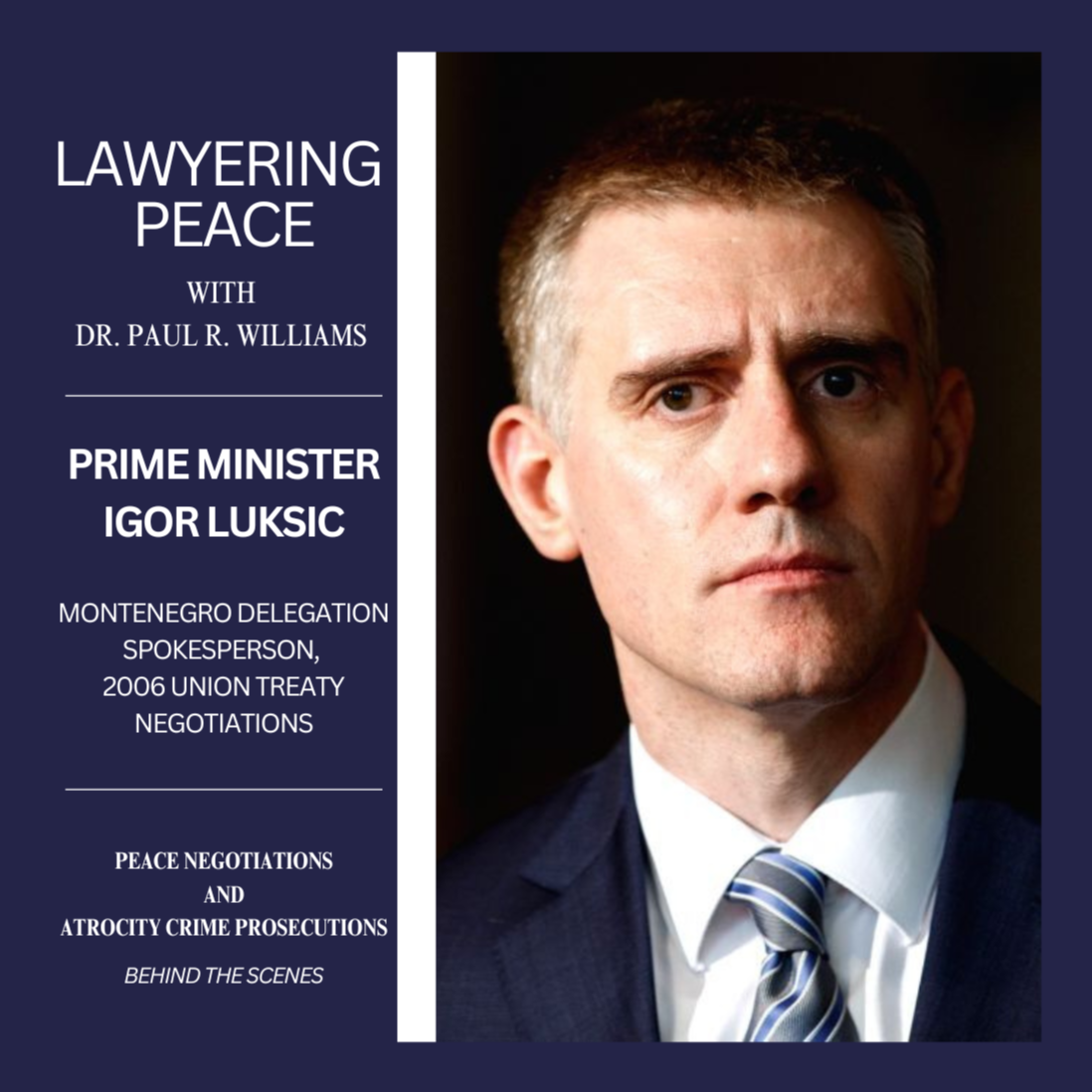
Igor Luksic

Former President of Montenegro Igor Luksic discusses his role as a key member of the Constitutional Commission that negotiated the Union Treaty of Serbia and Montenegro — the agreement that provided for Montenegro's secession from the Federal Republic of Yugoslavia.

Listen to episode

Igor Luksic

2006 Union Treaty Negotiations
Post-conflict Peacebuilding Theme
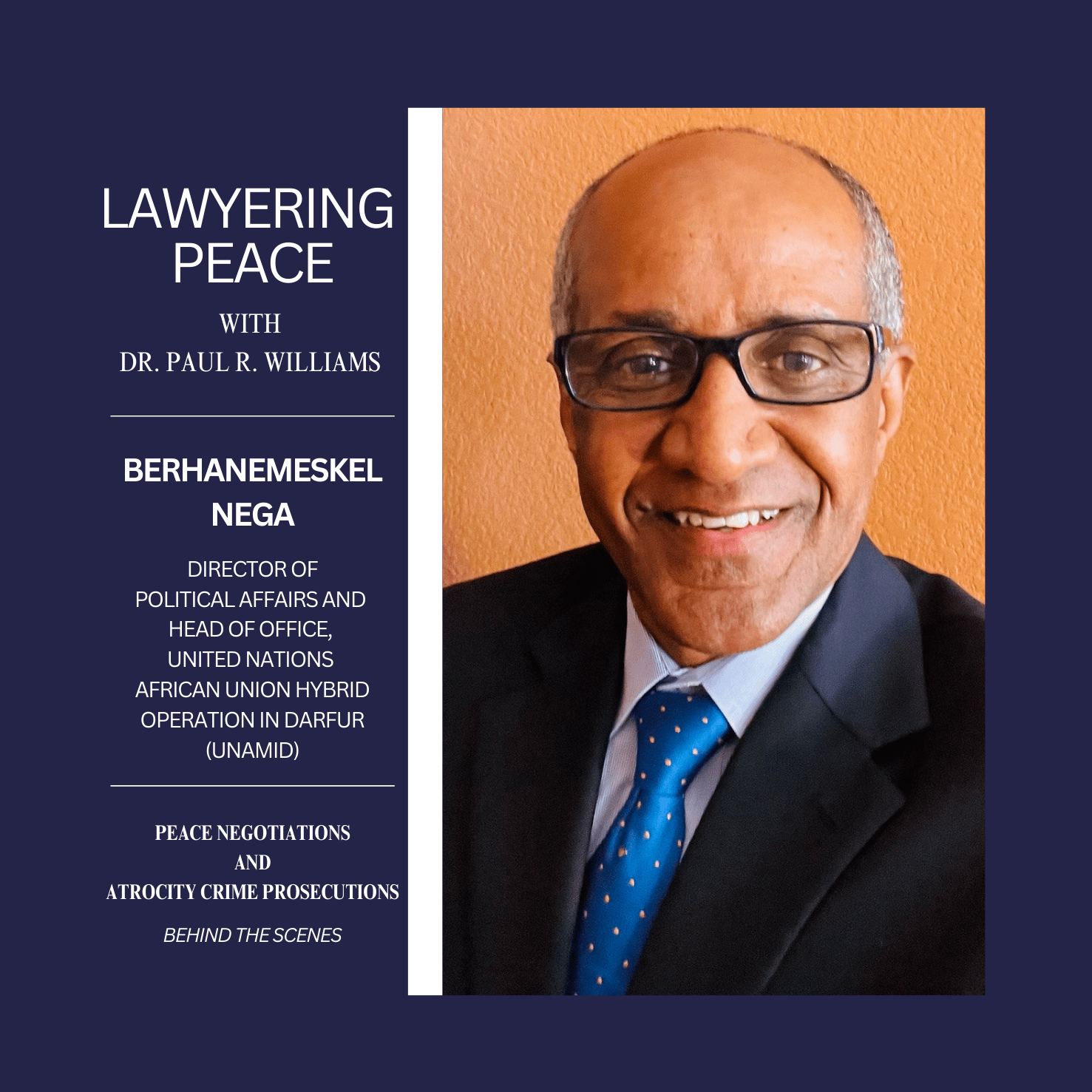
Berhanemeskel Nega

Berhanemeskel Nega, seasoned diplomat with over 35 years of experience, takes us inside the UN-AU hybrid peacekeeping mission in Darfur (UNAMID) — navigating a resistant Sudanese government, inadequate legal protections for peacekeepers, and the importance of addressing root causes of conflict rather than relying on superficial peace efforts.

Listen to episode

Berhanemeskel Nega

Lessons Learned from the UN-AU Peacekeeping Mission in Darfur
Ambassador Robert Ford

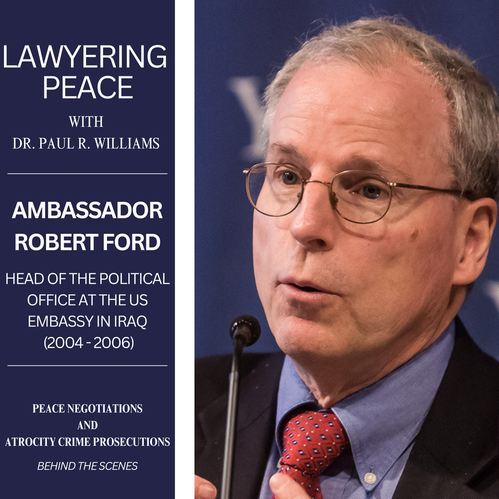
Ambassador Robert Ford, who led the political office in the US Embassy in Iraq from 2004–2006, offers a candid reflection on the challenges and lessons of the 2005 Iraqi elections — the Sunni boycott, the complexities of promoting federalism, and how elections without broader political processes can deepen divides rather than bridge them.

Listen to episode

Ambassador Robert Ford

Behind the Scenes of the 2005 Post-Liberation Iraq Elections

Anna Triponel

Anna Triponel, who led PILPG's efforts to advise Libya on its post-conflict constitutional process, explores the monumental challenges of building a new state from scratch — widespread weapons, deep-seated distrust, regional and ethnic divisions, and the struggle to foster loyalty to a national identity while developing local accountability mechanisms for atrocity crimes.

Listen to episode

Anna Triponel

Peacebuilding in Post-Conflict Libya

Ambassador Zorica Maric Djordjevic

Ambassador Zorica Maric Djordjevic explores Montenegro's extraordinary journey in international relations — an understated success story in US foreign policy — sharing her instrumental role in enhancing ties with the US, the UN, and the WTO from 1989 to 2020, and the importance of applying a gendered lens to negotiations.

Listen to episode

Amb. Zorica Maric Djordjevic

Advancing Montenegro's Global Diplomacy (1989–2020)

Dr. Patrick Maluki

Dr. Patrick Maluki, Senior Lecturer at the University of Nairobi and Kenya's top expert in peace and diplomacy, shares his in-depth knowledge of the causes of conflict, conflict prevention, and conflict mitigation — drawing on extensive experience as an expert trainer and researcher in international negotiation, mediation, human rights, and governance.

Listen to episode

Dr. Patrick Maluki

Conflict Mitigation and Mediation

Yoonie Kim

Yoonie Kim, former Senior Advisor to the UN Special Envoy on the Yemen peace process (2011–2015), examines how mediation teams operate when supporting challenging and complex negotiations — and the vital importance of collaboration between the various actors involved when pursuing durable peace.

Listen to episode

Yoonie Kim

Yemen 2011–2015

Nexus of Peace & Justice Theme
Ambassador Yvette Stevens

Ambassador Yvette Stevens, Sierra Leone's first female engineer, reflects on the Lomé Peace Accord and the groundbreaking Special Court for Sierra Leone — which achieved numerous firsts in international law including the first conviction of a former head of state since Nuremberg, and prosecution of child soldier recruitment and forced marriage as crimes against humanity.

Listen to episode

Ambassador Yvette Stevens

Sierra Leone's Journey from Civil War: Balancing Peace and Justice

Justice Richard Goldstone

Justice Richard Goldstone recounts his journey from dismantling apartheid within the South African justice system to serving as first Chief Prosecutor of the ICTY and ICTR — reflecting on pursuing justice amid political resistance, groundbreaking advancements in prosecuting gender-based crimes, and the enduring tension between peace and accountability.

Listen to episode

Justice Richard Goldstone

The ICTY, Peace, and Accountability
Margaret deGuzman

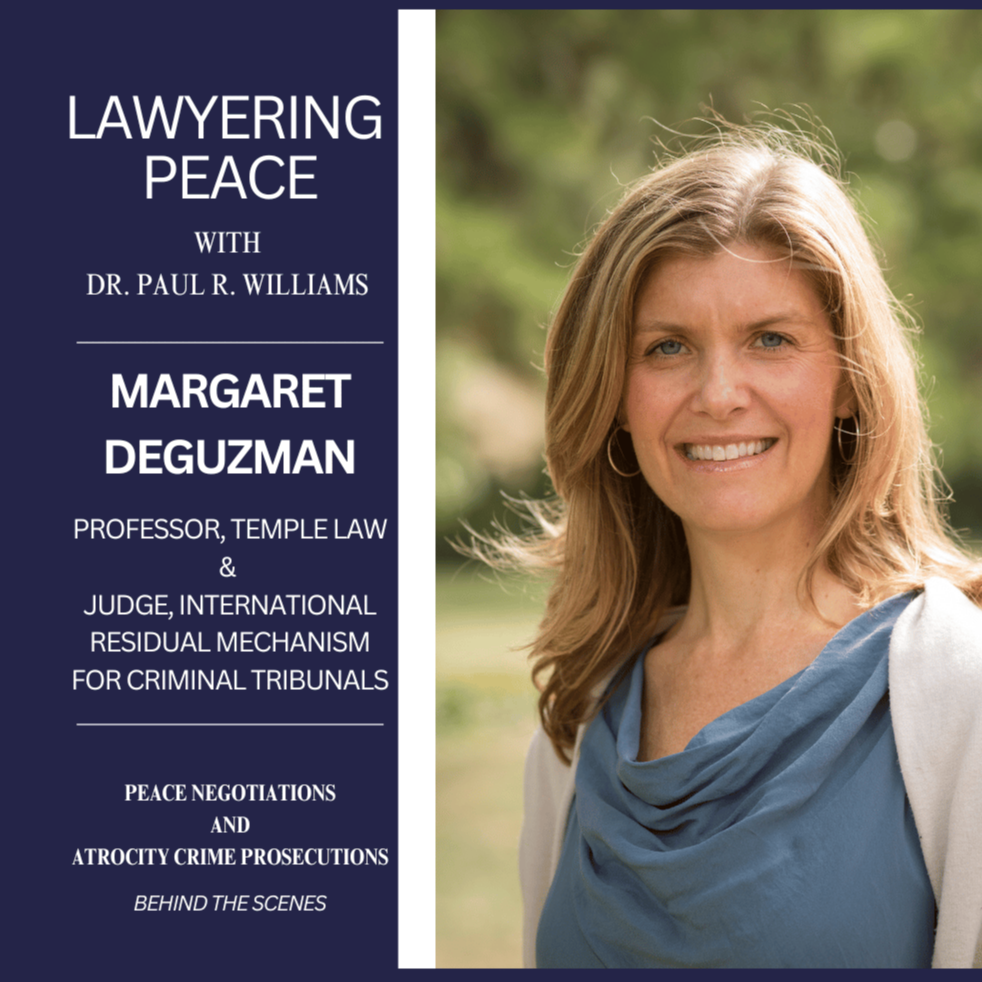
Professor Meg deGuzman, distinguished judge at the International Residual Mechanism for Criminal Tribunals, explores the potential of non-judicial accountability mechanisms — truth commissions and reparations — arguing these approaches hold substantial promise for justice and durable peace yet receive far less attention than judicial mechanisms like the ICC.

Listen to episode

Margaret deGuzman

Re-Imagining Justice

David Crane

Chief Prosecutor David Crane, renowned for indicting Charles Taylor — marking the first time a sitting head of state was held accountable for atrocity crimes — explores the Special Court for Sierra Leone as a blueprint for future tribunals, and the delicate balance between blanket amnesty and the pursuit of justice.

Listen to episode

David Crane

Prosecuting a Sitting Head of State for Atrocity Crimes
Ambassador Stephen Rapp

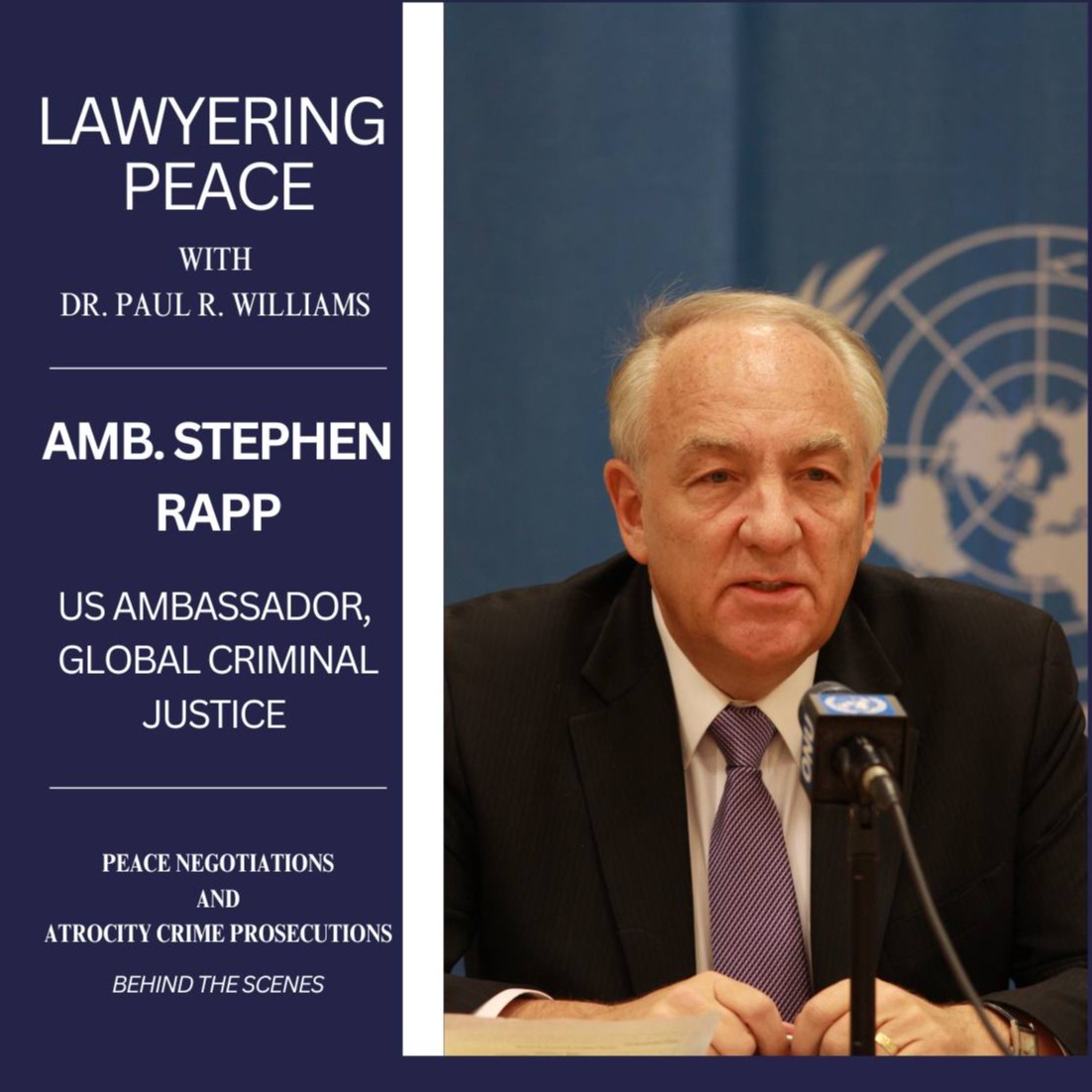
Ambassador Stephen Rapp, former US Ambassador-at-Large for Global Criminal Justice, shares insights into accountability related to the Arab Spring, Sierra Leone, and the Rwandan Genocide — exploring the balance between amnesty and accountability, and making the case that durable peace is unattainable without justice.

Listen to episode

Ambassador Stephen Rapp

Global Criminal Justice
Kate Gibson

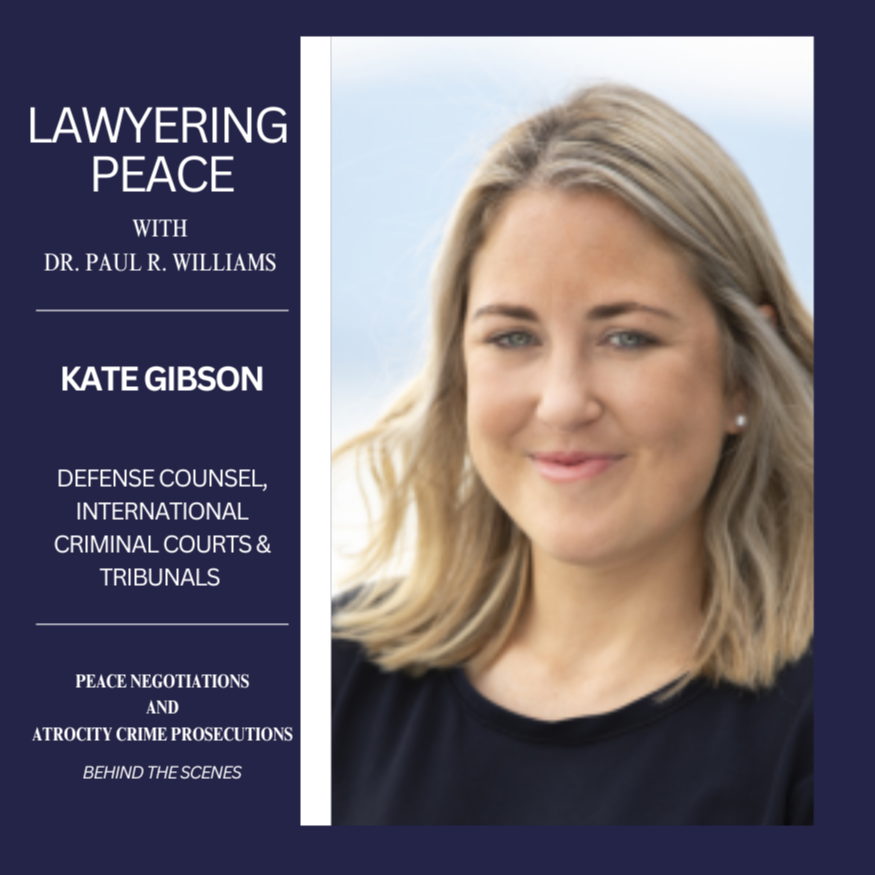
Kate Gibson, who has represented former heads of state, military leaders, and victims before international criminal courts since 2005, challenges the belief that we are in an "Era of Accountability" — discussing how tribunals can sometimes hinder peace, especially in cases of victor's justice or when processes are too disconnected from affected communities.

Listen to episode

Kate Gibson

Defending Justice

Michael Scharf

Michael Scharf, a drafter of the Statute that created the ICTY, explores how a tribunal initially intended as a symbolic gesture became a powerful instrument of justice — and how its prosecutor's unwavering commitment to justice over political convenience shaped the Balkans peace processes and the legacy that informed the creation of the ICC.

Listen to episode

Michael Scharf

Establishing the International Criminal Tribunal for the Former Yugoslavia
Human Rights & Peace Theme
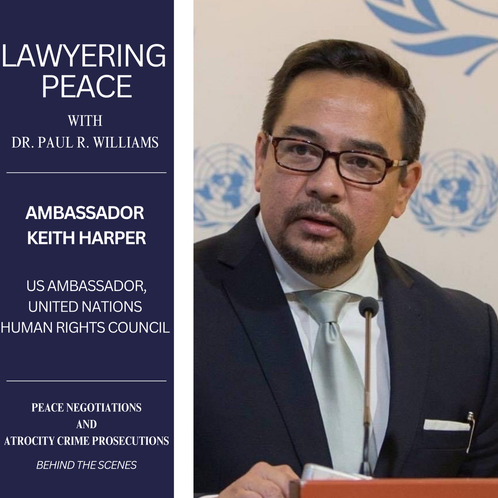
Ambassador Keith Harper

Ambassador Keith Harper, former US Ambassador to the UN Human Rights Council, explores the intricate relationship between human rights and durable peace — discussing how to integrate human rights into peace negotiations when accountability is at stake, with real-world examples from South Sudan to Sri Lanka.

Listen to episode

Ambassador Keith Harper

Human Rights and the Path to Durable Peace

Ambassador Jorge Lomónaco

Ambassador Jorge Lomónaco — chief negotiator of the Treaty on the Prohibition of Nuclear Weapons (Nobel Peace Prize) — discusses the moral obligation to prioritize human rights in peace negotiations, the difficult choices between amnesty and accountability, and the UN Human Rights Council's role in conflict situations across Latin America and beyond.

Listen to episode

Ambassador Jorge Lomónaco

United Nations Human Rights Council and Peace
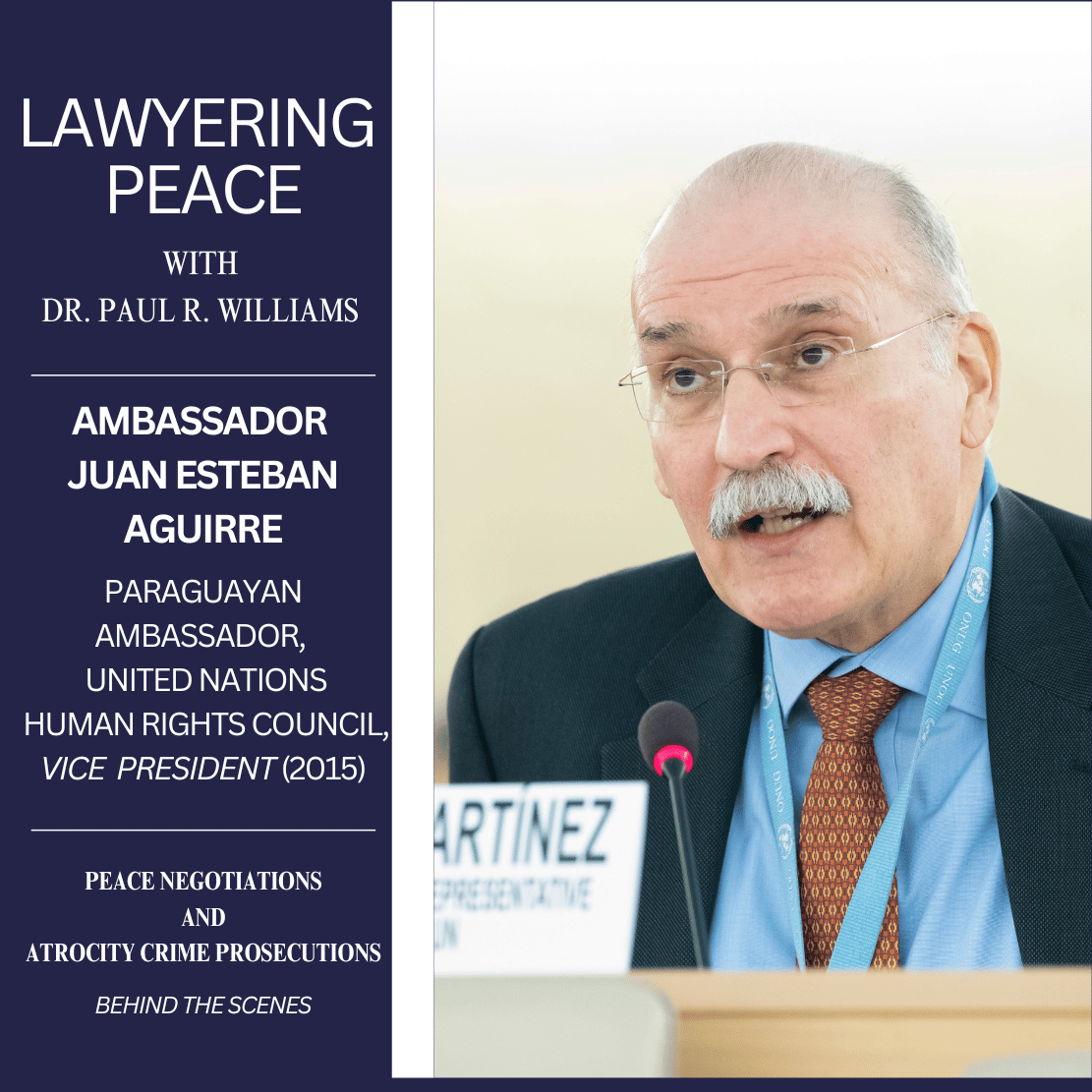
Ambassador Juan Esteban Aguirre

Ambassador Juan Esteban Aguirre, former Paraguay Foreign Minister and UN Human Rights Council Vice President, argues that for peace to be sustainable it must be built from the ground up — with human rights as a core principle, not just a component — and calls for a shift from a reactive to a preventive approach in addressing human rights abuses.

Listen to episode

Ambassador Juan Esteban Aguirre

Prioritizing Human Rights in the Peace Process